


Antimicrobial-resistant Neisseria gonorrhoeae represents one of the most pressing challenges in infectious disease, with the WHO targeting a 90% incidence reduction by 2030. Resistance has emerged against nearly every cl...
ICON experts frequently author or contribute to industry trade press.
Filter media
Filter media articles by either clicking within the ‘Category’ drop-down list, or begin typing which will automatically match to the nearest available category. Note - not all categories will display results if selecting a particular year.
-

The adherence imperative: Clinical operations and patient centricity
ICON’s Brian Mallon examines how aligning study delivery with existing site workflows and technologies can reduce duplication, strengthen site engagement and enable more connected clinical trials.
-

PM360 Think Tank – biosimilar rulings impact
Read ICON's Head of Centre for Biosimilar Drug Development lay out that as biosimilar pathways become faster and less costly, innovators need stronger differentiation, patient support and market access strategies.
-

Managing post-marketing pharmacovigilance across global markets
In this article from The Pharma Letter, Dr. Quintin van Wyk explores the challenges of post-marketing pharmacovigilance across global markets, from patient safety oversight to evolving regulatory requirements.
-

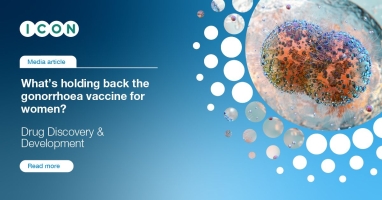
What’s holding back the gonorrhoea vaccine for women?
Despite decades of research, there is still no approved gonorrhoea vaccine. In this article, ICON experts explore the scientific, clinical and public health challenges that continue to shape vaccine development for women.
-

Countdown to JCA: What APAC and US drug developers need to know and do today
Read our article to find out what North American and APAC sponsors need to know about EU Joint Clinical Assessment — and why EMA approval doesn't guarantee reimbursement.
-

How risk-based monitoring redistributes and reshapes capacity planning
As clinical trials grow more complex, effective capacity planning is becoming a strategic differentiator. In BioPharm International, Helen Yeardley discusses how risk-based monitoring models are changing where monitoring effort is directed and what sponsors should consider as they evolve their oversight strategies.
-

How evolving biosimilar guidance is reshaping bioanalytical strategy
This article discusses how regulatory change makes bioanalytical testing, such as CMC analysis, as well as PK/PD studies, more important for getting regulatory approval.
-

ICON taps Anthropic and Microsoft as it puts clinical-trial agents into production
In this R&D World article, Tony Clarke, Senior Vice President, Enterprise AI, discusses how ICON is leveraging AI agents to improve efficiency and accelerate clinical trial delivery.
-

ICON taps Anthropic’s Claude to bring agentic AI to clinical trials
ICON is pairing frontier AI capabilities with its deep clinical trial management across its global footprint, targeting structural inefficiencies in global trial execution.
-

The PPWR mandate: Essential strategies for pharma and medtech
In this article, ICON's regulatory experts explore the practical implications of PPWR and the strategies organisations should be considering now.